

I’ve been stringing lacrosse sticks since I was about ten. More than 300 of them by now. For most of that time, every pocket started and ended as a conversation: a player tells me how they want it to feel, I string it, they walk away, and everything we talked about is gone.
StringLab started with one question. What if every pocket kept a record?
Start from how the player plays
The site opens with a short Pocket Profile instead of a price list. Seven questions cover who the player is, how they play, what they want the pocket to do and what gear they’re bringing. Those answers decide where the ball sits and how it comes out.
The whole service follows one loop: Profile, then Build, then Tune. The profile isn’t a form to get through before the real work. It is the brief for the build.
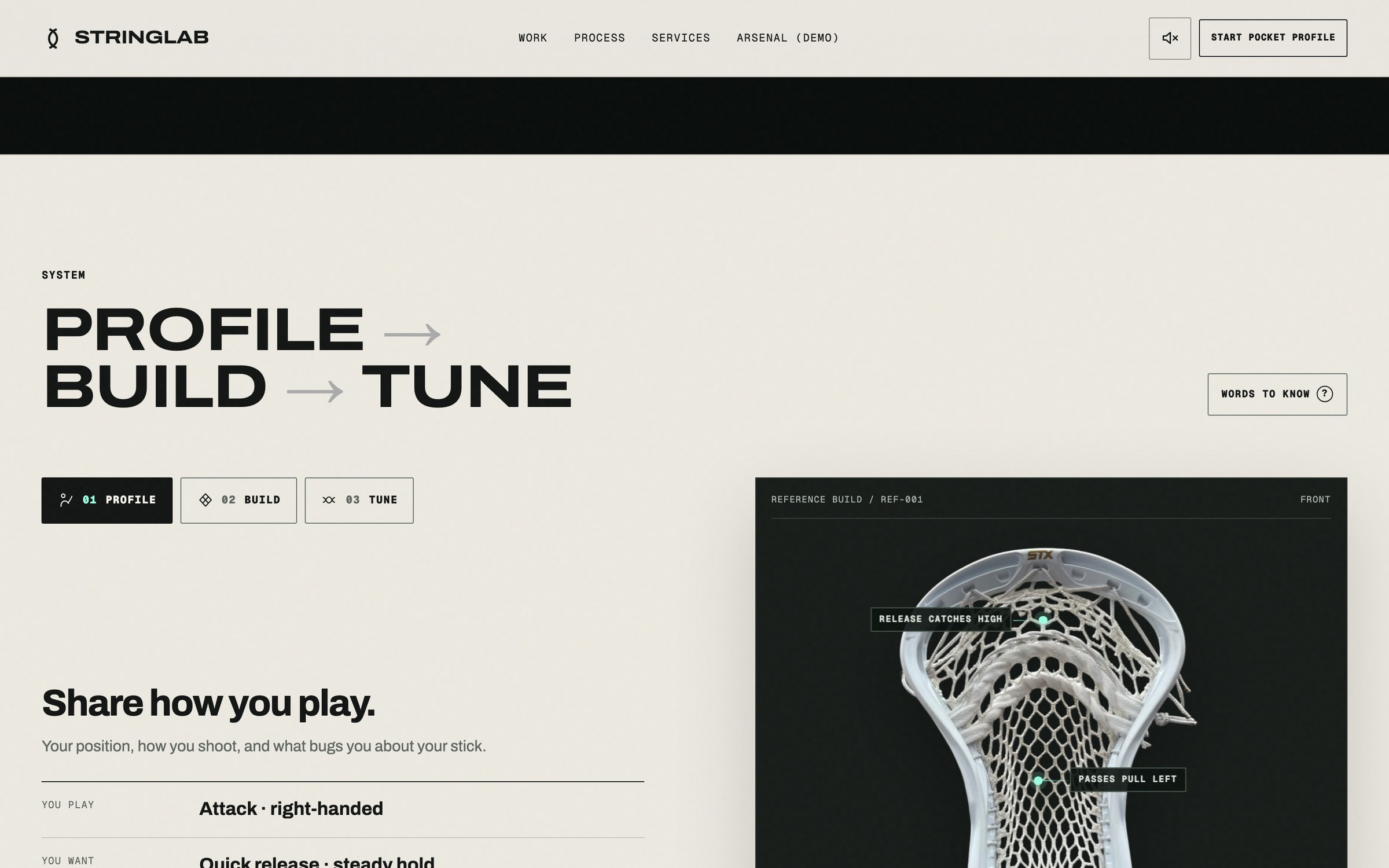
The Profile step on the live site. The answers sit next to a photographed reference build.
One ID that follows the stick
Every build gets a Pocket ID, like SL-001. The profile travels with the stick into every tune and re-string, so the next pocket starts from the last one instead of from scratch.
That one decision shaped everything else, including the brand. The mark is a single cell of mesh, and the ID shows up on physical pieces like a throat tag and a pocket card.
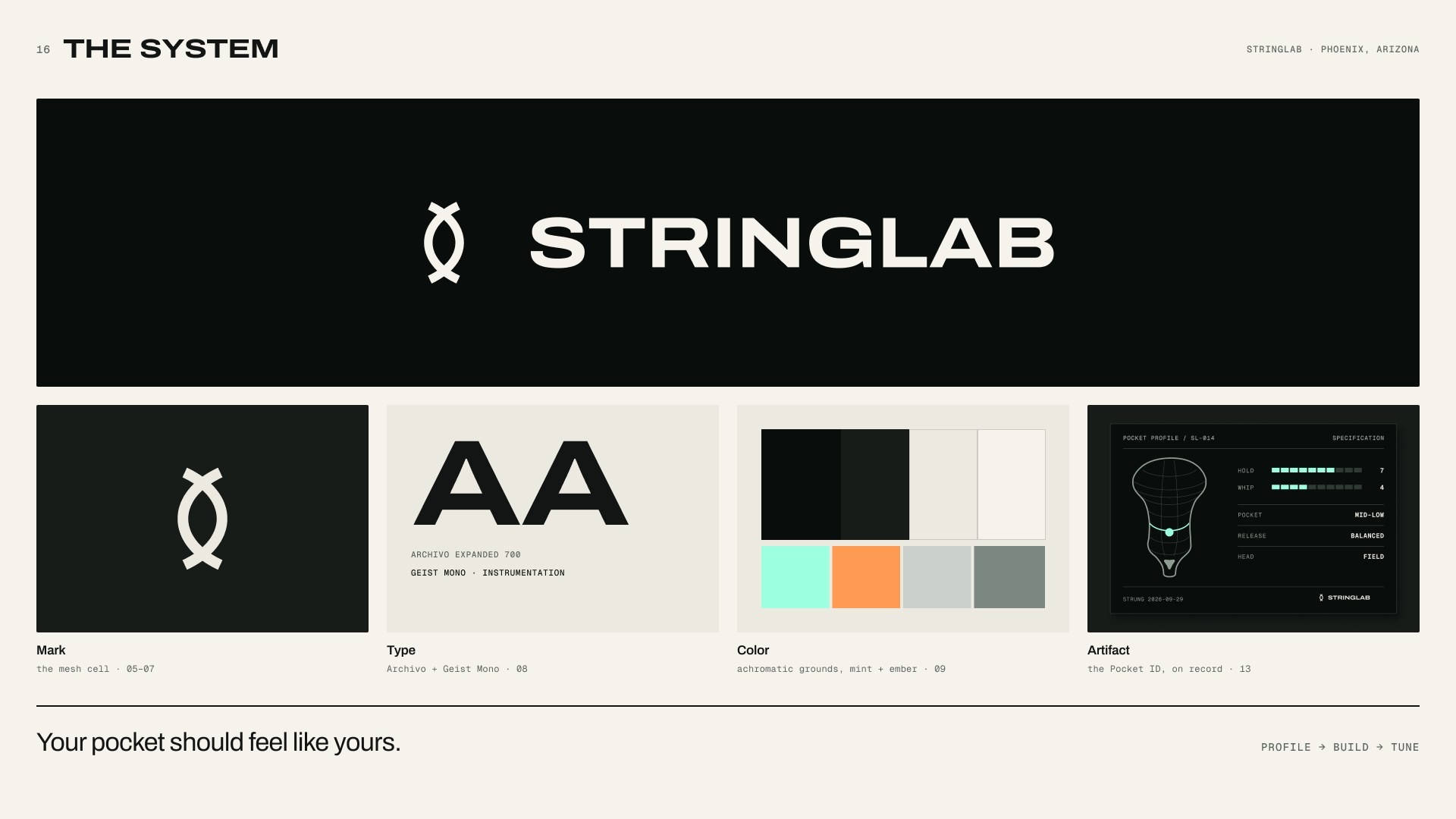
The brand system on one page, with the Pocket ID as its own artifact.
Arsenal: the record, as a loadout
Players rarely own one stick. Arsenal is a demo of what the record looks like across a whole bag, from the game stick to the backup, each with its pocket’s history. After a game, a player can check in and log how the pocket felt, and that check-in lands in the stick’s history.
The demo runs on one sample player, and check-ins stay on your own device. Nothing is saved to a server yet.
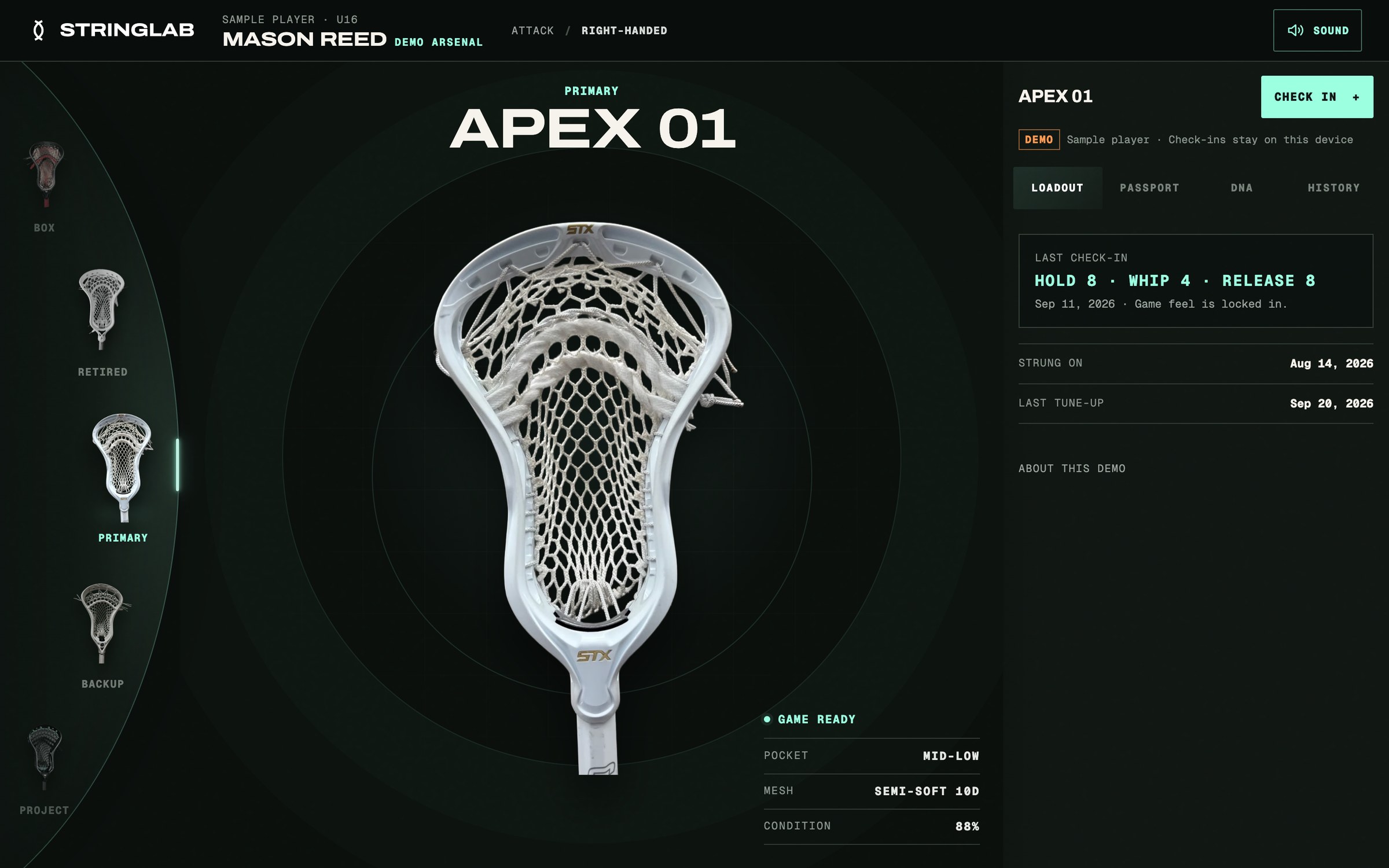
Arsenal, opened on the sample player’s primary stick.
What’s live, and what isn’t
The website is live, with the Pocket Profile and Pocket ID working. Arsenal is a working demo with sample data. A 3D workbench that teaches the build step by step exists as a prototype, and I’m keeping it off the product until a verified stringer authors the lessons.
If you play, start a Pocket Profile. If you’re curious about the record, try the Arsenal demo.
From the case study